














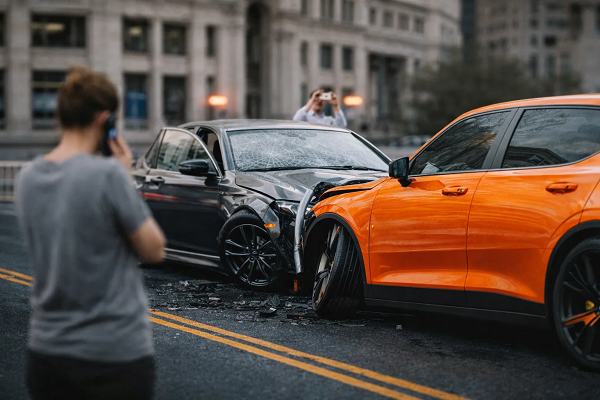




Who is liable in a Waymo car accident? The answer depends on what caused the crash, who was involved, and the law where it happened. That question is becoming more relevant for Toronto residents. On October 16, 2026, Waymo announced its expansion to Toronto, with a goal of welcoming its first riders in 2028. Its planned rollout begins with human drivers behind the wheel of Waymo vehicles for mapping, followed by testing with trained specialists. The company says it is working with authorities to secure the permits needed for fully autonomous service.
When a self-driving car is involved in a collision, identifying who is responsible starts with understanding what happened. Was another driver involved? Was the vehicle being driven manually, or was its automated driving system engaged? Did the collision involve multiple vehicles? These questions can help guide an investigation into injury-causing crashes. For anyone who suffers a serious injury, the answers may be central to understanding who could be liable and what compensation options may be available. This guide explores those questions, with a focus on what Waymo’s planned arrival could mean for people using Toronto’s roads.
What is Waymo? Does The Company Have Cars in Toronto?
Waymo is an autonomous driving technology company that operates a self-driving ride-hailing service in several U.S. cities. Its automated driving system, called the Waymo Driver, uses cameras, radar, lidar sensors and software to detect its surroundings and navigate roads. In areas where its fully autonomous service is available, passengers can travel without a human driver behind the wheel.
Waymo’s Toronto rollout is beginning with a limited fleet of electric Jaguar I-PACE vehicles for mapping and testing. On October 16, 2026, the company announced that manually driven Waymo vehicles would begin appearing on Toronto streets in the coming days. Waymo says it has received an Ontario Ministry of Transportation permit to begin manual driving and testing under the province’s Automated Vehicle Pilot Program. Its rollout starts with human drivers mapping local roads, followed by testing with trained specialists behind the wheel.
As of October 23, 2026, Waymo is not offering commercial passenger rides in Toronto. The company aims to launch its fully autonomous service in 2028, subject to the required permits. Its planned mapping and testing areas include Liberty Village, Harbourfront, Leaside, Don Mills and other Toronto neighbourhoods. For anyone researching a potential Waymo car accident claim, this timeline matters: a vehicle used for mapping or supervised testing may be operating differently from a driverless vehicle carrying paying passengers.
Waymo self-driving taxis are regarded as a safe method of transportation. Waymo vehicles were involved in 89 crashes from 2021 to 2024. Two fatalities have occurred in accidents involving Waymo vehicles. Moreover, Waymo’s vehicles faced 90% fewer insurance claims than human drivers.
What Features Make Waymo Vehicles a Safer Method of Transportation?
Waymo vehicles combine sensors, detailed maps, and automated driving software to reduce collision risk. The Waymo Driver also avoids human risks such as fatigue, alcohol impairment and distraction from texting. These features support safer travel, although they cannot prevent every accident.
Key safety features of Waymo’s self-driving technology include:
- Sensors that monitor the surroundings: Cameras, radar and lidar work together to detect nearby vehicles, pedestrians, cyclists and road hazards. Lidar uses laser pulses to measure distances and build a three-dimensional view.
- Detailed road maps: Before entering a new service area, Waymo maps features such as lanes, crosswalks and traffic signs. Its vehicles combine these maps with live sensor data to establish their location.
- Software that anticipates movement: The system estimates the possible paths of other road users and uses that information to plan its speed, steering and braking. These predictions help guide its response as traffic conditions change.
Waymo also uses computer simulations and public-road testing to evaluate its technology. Its safety process examines whether the system is ready for its intended operating conditions. These safeguards help explain the company’s approach to accident prevention, but real-world results must assess their effectiveness. As discussed above, its published U.S. crash rates do not establish how the service will perform in Toronto’s traffic and winter conditions.
Waymo maintains a 24-hour hotline for emergency responders to assist during incidents. Waymo’s vehicles are also equipped to recognize and respond to emergency vehicle sirens.
Waymo’s Self-Driving Car Accident Rates
Waymo reports that its fully autonomous vehicles have a lower injury-related crash rate than human drivers in the U.S. areas studied. Through June 2026, its safety analysis covered 271.3 million miles driven without a human driver. According to the company, Waymo vehicles were involved in 82% fewer crashes with reported injuries and 95% fewer crashes involving serious injury or death than the human driver benchmark over the same distance in those areas.
These figures measure crash involvement, regardless of fault. The analysis includes collisions involving other drivers, as well as injuries to people outside the Waymo vehicle. It compares driverless cars with human driving benchmarks based on local crash records and distance travelled. This approach helps assess Waymo’s technology, but the results do not establish how its vehicles will perform in Toronto’s traffic or winter weather.
A lower crash rate also does not mean that Waymo vehicles cannot be involved in an accident. Nor does a company’s overall safety record determine who is liable for a specific collision. Waymo’s analysis expressly separates crash involvement from legal fault. For an injured person, the key question remains what caused their accident and who may have caused or contributed to it.
Who Is Liable in a Waymo Car Accident?
Liability in a Waymo car accident depends on what caused the collision and which laws apply. For a crash in Ontario, an investigation may need to consider the vehicle’s operation, the actions of other road users and any alleged equipment or software failure. The parties below could face a claim, depending on the evidence. These are potential applications of existing legal principles, rather than findings about any particular Waymo accident.
The Autonomous Vehicle Company or Operator
An autonomous vehicle company or fleet operator could be liable if its negligence caused or contributed to a crash. Potential issues could include unsafe maintenance, inadequate staff training or a failure to address a known safety problem. An investigation would need to establish what the company was responsible for, whether it failed to take reasonable care and how that failure caused harm.
The company’s exact role matters. Developing the driving system, owning the vehicle and managing fleet maintenance are different functions that may involve different businesses. A company should not be assumed liable simply because its name appears on the vehicle.
The Vehicle Manufacturer or Software Developer
A vehicle manufacturer, parts supplier or software developer could face a claim if a dangerous defect resulting from its negligence caused an injury. For example, investigators might examine whether a braking component failed or whether the automated driving system responded incorrectly to a road hazard. Canadian product liability principles recognize responsibility for injuries caused by negligently manufactured products, as well as duties to warn about certain product dangers.
A malfunction alone does not establish which company is legally responsible. A claim involving autonomous driving software would require evidence connecting the alleged failure to the defendant’s legal duties and the collision. Vehicle data, maintenance records and expert analysis may help establish that connection.
A Human Driver or Safety Operator
A human driver may be liable if negligent driving causes a collision. Ontario’s Highway Traffic Act makes drivers responsible for loss or damage caused by their negligent operation of a motor vehicle. This can be relevant when a Waymo vehicle is being driven manually for mapping or testing.
A safety operator’s responsibility would depend on their assigned role, their ability to control the vehicle and what a reasonably careful operator should have done. Being present in the driver’s seat does not, by itself, settle fault. Investigators would need to determine who or what controlled the vehicle and whether a failure to act contributed to the crash.
Another Motorist or Road User
Another motorist could be wholly or partly responsible for a collision involving a Waymo vehicle. Running a red light, making an unsafe turn or following too closely could support a negligence claim if that conduct caused the accident. A collision involving a self-driving car still requires an examination of the other driver’s actions.
Other road users may also share responsibility where their negligence contributes to the harm. Ontario’s Negligence Act allows fault to be divided among those responsible, including an injured person whose own negligence contributed to their damages.
Can More Than One Party Be Liable?
Yes. More than one party can be liable for the same accident. For example, another driver’s unsafe lane change and a proven failure by a vehicle operator could both contribute to a collision. Ontario’s Negligence Act generally requires courts to determine each negligent party’s share of fault.
How much each party must pay can also depend on Ontario’s automobile insurance laws and the damages being claimed. Identifying all potentially responsible parties is therefore an important part of investigating a Waymo car accident claim.
How Does Insurance Work After a Waymo Accident?
After a Waymo car accident in Ontario, insurance may provide support through statutory accident benefits (SABs) and a separate claim against a legally responsible party. These serve different purposes. Accident benefits can help eligible injured people access support regardless of who caused the crash. A liability claim seeks compensation from a party whose negligence caused or contributed to the injury. The available coverage depends on the policies, the circumstances and Ontario law.
Accident benefits may cover eligible medical treatment, rehabilitation and attendant care, subject to policy limits and legal requirements. For Ontario policies entered into or renewed on or after July 1, 2026, these benefits remain mandatory, while crucial benefits like income replacement are optional. Existing benefits generally continue at renewal unless the policyholder agrees in writing to changes. Therefore, check the policy in force and the injured person’s coverage before assuming lost income or other expenses are covered.
You may still qualify for accident benefits even if you do not own a car. However, Ontario’s insurance priority rules and your available coverage determine which insurer handles your application. Optional benefits also have specific eligibility rules. Being a passenger in a Waymo vehicle would not, by itself, establish entitlement to every benefit purchased under that vehicle’s policy.
A separate personal injury claim may be available against a negligent driver, vehicle operator or another responsible party. Their liability insurer may respond, subject to coverage and policy limits. Ontario’s automobile insurance laws can restrict certain damages, so neither an insurance policy nor proof of injury guarantees a settlement. Ontario’s automated vehicle pilot currently requires at least $5 million in liability coverage for vehicles with fewer than eight passenger seats, but that minimum does not establish Waymo’s actual policy limits or guarantee how much an injured person will recover.
What Should You Do If You Were Injured by a Self-Driving Car?
If you were injured by a Waymo autonomous vehicle or any other self-driving car, put your safety first. Get medical help, report the collision, and preserve evidence when it is safe to do so. Whether you were a passenger, pedestrian, cyclist, or another driver, these steps can help protect your health and support a potential personal injury claim.
- Get medical attention. Call 911 if anyone is seriously injured or there is an immediate danger. Seek medical assessment for your injuries and follow the treatment advice you receive. Toronto Police provides separate reporting options for collisions that do not require an emergency response.
- Report the collision to police. Tell police that a self-driving vehicle was involved and follow their reporting instructions. Record the collision report number and any information about the vehicle’s owner or operator.
- Collect information safely. Photograph the vehicles, licence plates, damage, road conditions and nearby traffic signs. Get witness contact details and the insurance information available at the scene. If you were a passenger, save your trip receipt, booking details and messages with the ride service.
- Preserve evidence about the vehicle’s operation. Write down what you observed, including whether someone was driving. Avoid guessing whether the automated system was engaged. A lawyer can help seek preservation of relevant camera footage, vehicle data and operator records that may help explain what happened.
- Notify the insurer and apply for accident benefits promptly. Report the accident within seven days, or as quickly as possible afterward. If you are seeking accident benefits, tell the appropriate insurer that you intend to apply. You generally have 30 days after receiving the application forms to return them. If you miss a deadline, seek advice rather than assuming you have lost your claim.
- Keep records and seek legal advice early. Save treatment receipts, proof of missed work and notes about your recovery. Before accepting a settlement or signing a release, understand which claims it would resolve. Ontario generally allows two years from discovery of a claim to start a lawsuit, but exceptions and shorter notice requirements may apply. A lawyer can identify the deadlines relevant to your case.
Speak to a Waymo Self-Driving Car Accident Lawyer
An accident involving a self-driving car can leave you with injuries, unexpected costs, and questions about who is responsible. A personal injury lawyer can review the circumstances, explain your insurance options, and help identify the parties who may be liable. Getting advice early can also help you preserve evidence and meet important claim deadlines.
If you or a loved one has been injured in a collision involving a Waymo vehicle, contact Bergel Magence Personal Injury Lawyers for a free, no-obligation consultation. Our team can assess your situation, explain your rights under Ontario law, and discuss your next steps. Let our family take care of your family.